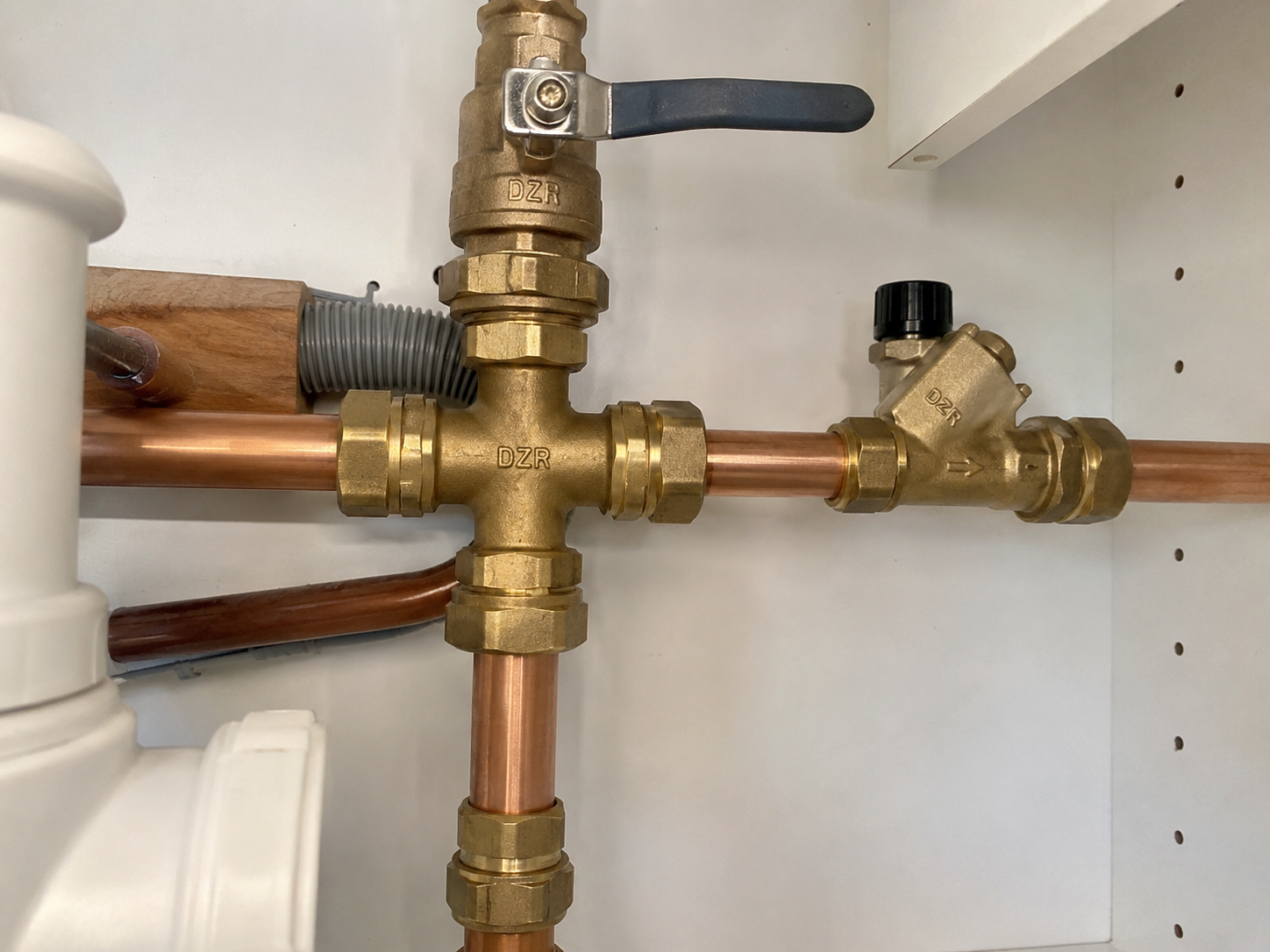
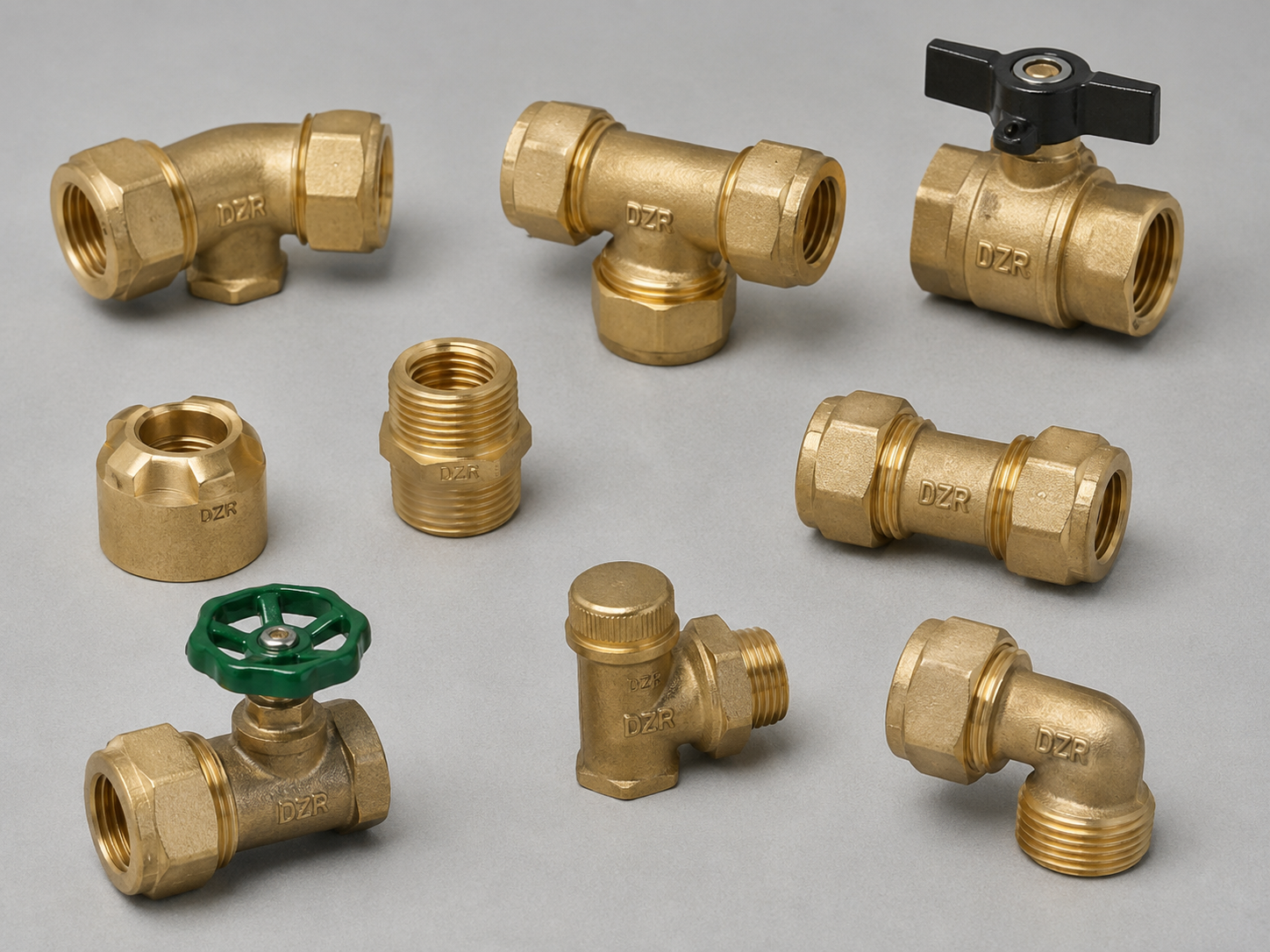
Why We Use DZR Brass Fittings
We use DZR brass fittings where appropriate because they are more resistant to corrosion than standard brass, especially in hard-water areas. They cost a little more, but they help reduce the risk of leaks, brittle fittings, and premature failure.
Use Dezincification Resistant brass fittings, usually called DZR brass, because ordinary brass can slowly corrode from the inside when exposed to certain water conditions.
Dezincification is where the zinc in brass is leached out, leaving a weak, porous, copper-rich material. The fitting can still look normal from the outside but become brittle, weep, crack, or fail later. DZR brass is specially made to resist that process.
For domestic plumbing, DZR fittings are worth using because they:
**Last longer in aggressive water conditions** Hard water, low flow, stagnant water, acidic/alkaline water, and heated water can all increase corrosion risk.
**Reduce the risk of hidden failures** A cheap fitting failing behind a bath panel, under a floor, or in a cupboard can cause far more damage than the small saving on the part.
**Are better suited to potable water** DZR brass fittings are widely used for components in contact with drinking water. Some UK water fittings test guidance refers to DZR/CR marking on brass fittings.
**Give a more professional installation** For stop valves, compression fittings, service valves, tank connectors, outside taps, and water softener/conditioner connections, DZR is the better-quality choice.
**Matter in hard-water areas like Kent** In places like Ashford and much of Kent, where hard water and scale are common, using better corrosion-resistant fittings is a sensible precaution.